


register for newsletter
get latest company news

Is building a solar panel factory a profitable investment?
It can be, but not in every market. A factory is more likely to be commercially viable when investors have access to reliable customers, competitive raw material sourcing, sufficient production capacity, favorable local manufacturing policies, or a clear advantage over imported solar panels.
In some markets, importing finished solar modules may still be cheaper and less risky than manufacturing locally. Therefore, investors should compare both business models before committing capital.
This guide explains eight important factors to consider before building a solar panel factory, from market research and investment planning to production line selection and equipment purchasing.
The first step is not purchasing equipment. It is understanding whether there is enough demand for locally manufactured solar panels.
Solar energy demand may be growing in a country, but that does not automatically mean a new solar panel factory will be profitable.
Investors should investigate:
Local Solar Panel Demand: How many solar modules are purchased annually? Is demand coming from utility-scale projects, commercial and industrial installations, or residential customers?
Existing Manufacturers: Are there already local solar panel manufacturers? What are their production capacities and market positions?
Imported Solar Panels: Which countries supply the local market? How competitive are imported module prices?
Customer Requirements: Do local buyers prefer particular module technologies, power ratings, dimensions, or certifications?
Sales Channels: Are there established distributors, solar project developers, EPC contractors, or other potential customers?
Future Demand: Are there confirmed solar projects or realistic market growth opportunities?
A particularly important question is:
Can locally manufactured solar panels compete with imported products in terms of price, quality, delivery time, and customer requirements?
If imported modules are significantly cheaper and there are no local manufacturing incentives or other competitive advantages, building a factory may be difficult to justify.
Investors should establish a realistic sales forecast based on actual customers and market conditions, rather than relying only on general solar industry growth forecasts.
Before investing in a solar panel production line, compare the cost of manufacturing locally with the total cost of importing finished modules.
This is one of the most important investment decisions for a new manufacturer.
Solar panel production in China benefits from a mature supply chain, large-scale manufacturing, established component suppliers, and extensive production experience. These advantages can make imported modules highly competitive in international markets.
A new factory in another country may face additional costs, including:
Imported solar cells and other key materials
International transportation of production materials
Local labor and electricity costs
Factory rent, infrastructure, and utilities
Equipment depreciation and financing
Production losses and quality control
Inventory and working capital requirements
Investors should compare the two business models using the same product specifications and a realistic cost calculation.
| Cost and business factor | Local manufacturing | Importing finished modules |
|---|---|---|
| Initial investment | Requires factory and production equipment | Usually lower |
| Raw material sourcing | Requires a reliable supply chain | Not directly required for module assembly |
| Production labor | Requires local employees | No local manufacturing workforce required |
| Manufacturing control | Greater control over production | Depends on external manufacturers |
| Delivery arrangements | Potentially closer to local customers | Depends on import and logistics arrangements |
| Local manufacturing incentives | May be available | May not qualify |
| Production responsibility | Manufacturer manages quality and operations | Buyer evaluates imported product quality |
The comparison should include all relevant costs, taxes, duties, logistics, and operating expenses. Local manufacturing is not automatically cheaper simply because the products are made closer to customers.
When does local manufacturing make more business sense?
It may be worth considering when:
Local content requirements favor domestically manufactured products.
Import tariffs or trade restrictions create a meaningful cost advantage for local production.
Government incentives reduce investment or operating costs.
Customers require local sourcing, customized products, or shorter delivery times.
Investors already have established sales channels and long-term purchase agreements.
Local manufacturing provides a strategic advantage that imported products cannot easily offer.
If none of these conditions exists, importing finished solar panels may be a more practical starting point.
Once the market opportunity has been evaluated, investors need to determine the appropriate factory capacity.
A common mistake among new investors is choosing production capacity based on ambitious sales expectations rather than actual market demand.
A larger production line does not automatically generate higher profits. If orders are insufficient, equipment may remain underutilized while the factory continues to carry labor, rent, maintenance, and financing costs.
Before selecting production capacity, consider:
Expected annual sales volume
Confirmed customer orders
Potential distributor demand
Available investment capital
Local raw material supply
Factory space and infrastructure
Available workforce and technical skills
It is also important to distinguish between designed production capacity and actual production output.
For example, a factory designed for 500 MW per year will not necessarily produce and sell 500 MW annually.
Actual output depends on working days, operating hours, equipment availability, production efficiency, product changeovers, quality yield, and order volume.
Investors should calculate realistic production output rather than using equipment nameplate capacity as their sales forecast.
For a new factory, a production capacity that matches the expected market demand is generally a safer starting point than building the largest possible factory immediately.
Solar panel technology is another important decision because it affects equipment selection, material sourcing, production processes, and the customers you can serve.
Common crystalline silicon module technologies include:
TOPCon Solar Modules: A widely adopted high-efficiency cell technology used in many modern solar module products.
HJT Solar Modules: Heterojunction technology, which uses a different cell structure and manufacturing process.
BC Solar Modules: Back-contact technology, with electrical contacts positioned on the rear side of the cell.
Investors should not select a technology simply because it is popular or frequently discussed in the industry.
Instead, consider:
Which technologies are accepted by local customers?
Which module products are competitive in the target market?
Can the required solar cells and materials be sourced reliably?
What equipment changes or additional configurations are needed?
What are the investment and production cost differences?
Will the selected production line support future product upgrades?
Other product decisions also matter, including:
Monofacial or bifacial solar modules
Glass-backsheet or double-glass modules
Module dimensions and cell sizes
Power ratings and electrical specifications
Frame and junction box configurations
The target product range should be determined before finalizing the production line design.
The cost of building a solar panel factory is much more than the price of the production equipment.
Investors should prepare a complete project budget covering both initial investment and the working capital needed to keep the factory operating.
Typical initial investment items include:
Factory building or rental costs
Factory renovation and infrastructure
Solar panel manufacturing equipment
Electrical systems and utilities
Material handling and storage facilities
Installation and commissioning
Testing and quality inspection equipment
Certifications and other project-related expenses
After production begins, the factory will continue to incur expenses such as:
Solar cells and other raw materials
Glass, encapsulants, backsheets, frames, and junction boxes
Labor and employee benefits
Electricity and utilities
Equipment maintenance and spare parts
Packaging and transportation
Quality testing and production losses
Administration and financing costs
Raw materials are particularly important because they represent a major part of solar module manufacturing costs.
Investors should also pay attention to working capital. A factory may have sufficient funds to purchase equipment but insufficient cash to purchase materials, maintain inventory, pay employees, and fulfill customer orders.
A factory needs enough working capital to support production and sales, not just enough capital to install the equipment.
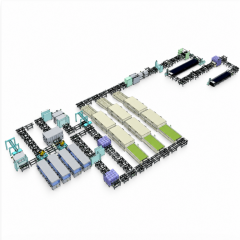
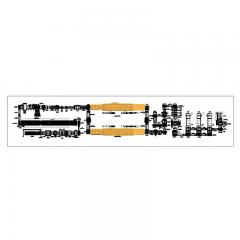
After determining the target capacity, module technology, and investment budget, investors can begin planning the production line.
The equipment configuration should match the products the factory intends to manufacture and its expected production output.
A typical crystalline silicon solar module production line includes the following main processes:
Solar cell testing and sorting
Solar cell cutting, if required by the product design
Cell stringing and soldering
Glass loading and material preparation
Layup and cell string arrangement
Busbar connection and interconnection
EL inspection before lamination
Lamination
Trimming, framing, and junction box installation
Curing and final assembly
EL inspection and final quality testing
Module cleaning, labeling, and packaging
The exact equipment configuration depends on the manufacturing process, product specifications, automation level, and required production capacity.
For example, a factory producing different module technologies or larger module formats may need specific equipment configurations.
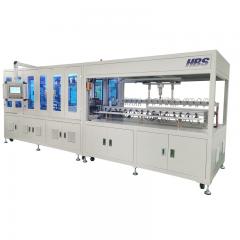
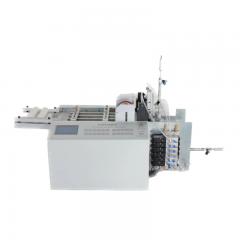
New investors may consider purchasing a complete solar panel production line, while existing manufacturers may only need individual machines to replace outdated equipment or increase capacity.
A complete production line can simplify equipment coordination and project implementation when the supplier has sufficient integration experience.
Purchasing individual machines may provide more flexibility, especially when the factory already has some production equipment.
However, investors should pay attention to equipment compatibility, communication between machines, production speed matching, and overall process integration.
The goal is not simply to purchase more automated equipment. It is to build a production line that meets actual production requirements without unnecessary investment.
Choosing the right equipment supplier can significantly affect the success of a new factory project.
Equipment suppliers differ in manufacturing capability, technical experience, project implementation, and after-sales service.
Before selecting a supplier, investors should evaluate several important factors.
Does the supplier have its own equipment manufacturing and assembly facilities? Does it have experienced mechanical, electrical, and software engineers?
Has the supplier delivered similar solar panel production line projects? Can it provide actual equipment operation videos or customer references?
Can the supplier recommend equipment configurations based on your target capacity, product technology, factory layout, and budget?
Can the supplier provide installation guidance, equipment commissioning, production line integration, and operator training?
Can engineers provide remote technical support? Are spare parts available? Can the supplier arrange on-site service when necessary?
Can the supplier help with equipment maintenance, troubleshooting, and future production line upgrades?
Do not evaluate a supplier only by the initial quotation.
A low equipment price may not represent the lowest overall project cost if installation, technical support, spare parts, and maintenance are not adequately covered.
Purchasing and installing equipment does not mean the factory is ready to operate successfully.
A solar panel factory also needs a capable production management team and a reliable quality control system.
Investors should plan for:
Recruitment of experienced production managers and technicians
Operator training and standard operating procedures
Incoming material inspection
In-process quality inspection
EL testing and final module testing
Production data collection and traceability
Equipment maintenance schedules
Product certification and customer requirements
Quality control should be considered throughout the manufacturing process, not only during final inspection.
For example, EL inspection can help identify internal cell defects such as microcracks, broken cells, and poor soldering connections at appropriate production stages.
Appearance inspection can also identify visible defects such as scratches, contamination, and assembly problems.
A factory should establish clear inspection procedures to prevent defective products from moving to the next process or reaching customers.
Investors should also consider future upgrades. Solar module technologies, product dimensions, and customer requirements may change over time.
A well-planned factory should allow reasonable flexibility for equipment upgrades, process improvements, and changes in product specifications.
Before making a final investment decision, review the following questions:
| Key question | What you should confirm |
|---|---|
| Is there sufficient local demand? | Market size, customer demand, and realistic sales opportunities |
| Can local manufacturing compete with imports? | Total landed import cost versus local manufacturing cost |
| Is there a clear business advantage? | Local content rules, incentives, customer requirements, or delivery advantages |
| What capacity should the factory have? | Expected sales volume and realistic production output |
| Which products will you manufacture? | Cell technology, module type, dimensions, and specifications |
| What is the total investment? | Equipment, infrastructure, installation, and working capital |
| Is the production line properly designed? | Equipment configuration, process flow, and production capacity |
| Is the supplier reliable? | Manufacturing experience, installation, technical support, and spare parts |
| Can the factory maintain product quality? | Testing equipment, inspection procedures, and trained personnel |
| Is there a long-term operating plan? | Sales channels, maintenance, upgrades, and financial planning |
If several of these questions remain unanswered, it may be too early to commit to a large equipment investment.
The investment depends on production capacity, factory location, automation level, equipment configuration, product technology, and the scope of the project.
The total project cost should include more than manufacturing equipment. Factory infrastructure, installation, testing equipment, raw materials, and working capital must also be considered.
A reliable cost estimate requires a defined production capacity, target module specifications, and factory requirements.
Solar panel manufacturing can be profitable when the factory has competitive production costs, reliable raw material sourcing, sufficient orders, and a suitable market position.
However, profitability is not guaranteed by purchasing a production line.
Investors must compare local manufacturing costs with imported module prices and consider factory utilization, product quality, financing, and sales channels.
There is no single answer for every country.
Importing may be more economical when overseas manufacturers offer lower prices and local production has no clear cost or policy advantage.
Local manufacturing may be more attractive when local content requirements, import duties, government incentives, customer preferences, or supply chain considerations create a competitive advantage.
Investors should compare the total cost and commercial conditions of both options before making a decision.
The right capacity depends on expected market demand, confirmed orders, investment budget, available raw materials, and production management capability.
Investors should avoid selecting capacity based only on ambitious sales forecasts.
A realistic production plan should account for equipment availability, working days, production efficiency, quality yield, and actual customer demand.
A typical crystalline silicon module production line includes cell testing and sorting equipment, stringers, glass loading equipment, layup equipment, bussing equipment, EL testers, laminators, framing equipment, junction box installation equipment, and final testing systems.
The exact configuration depends on module technology, product dimensions, automation requirements, and production capacity.
A complete production line may be suitable for investors building a new factory without existing manufacturing equipment.
It can simplify equipment coordination, process integration, installation, and commissioning when supplied by an experienced project provider.
However, the final decision should depend on the project budget, technical requirements, and available in-house engineering capabilities.
Evaluate the supplier's actual manufacturing capability, project experience, equipment quality, production line planning, installation and commissioning services, spare parts availability, and long-term technical support.
It is also important to clarify the responsibilities, service scope, and costs in the contract before placing an order.
Building a solar panel factory is a business investment, not simply an equipment purchasing project.
The most important decisions happen before the first machine is ordered: understanding the market, comparing local manufacturing with importing, choosing the right products, determining production capacity, and calculating the total investment.
For new investors, the objective should not be to build the largest factory or purchase the most automated production line.
It should be to establish a factory with a realistic business plan, suitable equipment configuration, competitive production costs, reliable quality control, and sufficient working capital.
A successful solar panel factory starts with a sound investment decision and a well-planned production line—not simply with purchasing equipment.
An experienced equipment supplier can support investors during the early planning stage by discussing production capacity, module specifications, manufacturing processes, equipment selection, factory layout, and production line configuration.
For investors who have already evaluated their local market and decided to move forward, the next step is to develop an equipment plan that matches the actual project requirements.
The right production line should fit your business plan, investment budget, and target products—not the other way around.
get latest company news
Scan To Wechat