


register for newsletter
get latest company news

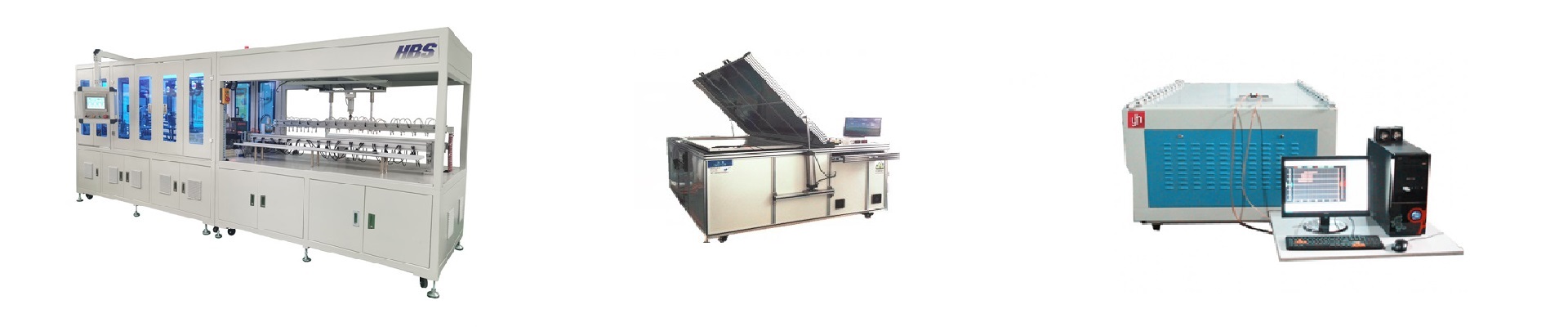
The solar module manufacturing industry has changed significantly. Production capacity has expanded, module prices remain under pressure, and second-hand manufacturing equipment is widely available. For investors considering a new solar module factory, buying equipment is no longer the most difficult decision. The real challenge is building a factory that can compete and make money.
A low-cost production line does not guarantee a profitable business. A modern automated factory does not guarantee one either. When module selling prices are tight, profitability depends on much more than the equipment itself.
So, in today's market, how should investors plan a solar panel production line that has a realistic chance of generating a return?
Before choosing production capacity or requesting equipment quotations, investors need to answer one fundamental question: Who will buy the modules?
A factory may have excellent equipment and sufficient production capacity, but if it cannot secure orders at a sustainable selling price, its investment will remain under pressure.
Potential customers may include solar project developers, EPC contractors, distributors, local installers, and buyers seeking modules that meet specific technical or certification requirements. The relevant customer base depends on the target country and market segment.
Investors should investigate local demand, competing manufacturers, import conditions, certification requirements, customer purchasing preferences, and the availability of long-term sales contracts.
A few confirmed customers can be more valuable than an ambitious production target without a clear sales strategy.
The first step toward a profitable solar module factory is to identify a market that the factory can realistically serve—not to decide how many megawatts it can produce.
A larger production line does not automatically generate higher profits. It also requires more working capital, greater material purchasing capacity, and enough orders to keep the equipment running.
A 50 MW, 100 MW, or 200 MW annual production line may suit different business models, but capacity should follow the expected sales volume and investment budget.
For example, a smaller line may be appropriate for an investor entering a regional market, testing local demand, or starting with a limited customer base. A larger line may make more sense when the investor has established distribution channels, committed customers, or a clear expansion plan.
The important point is to distinguish between installed capacity and actual output.
A line rated for a certain annual capacity will not necessarily achieve that output. Operating hours, production shifts, equipment downtime, changeovers, staffing, material availability, and order volume all affect actual production.
Before choosing capacity, investors should estimate three figures:
Expected annual sales volume
Realistic annual production output
Minimum output required to cover operating costs
These figures provide a more useful basis for equipment selection than capacity alone.
With so many second-hand solar module production lines available, it is understandable that investors want to reduce their initial investment.
Used equipment can be a reasonable choice when its condition, configuration, remaining service life, and technical compatibility have been properly assessed.
However, the purchase price is only one part of the total investment. A second-hand line may require dismantling, transportation, reinstallation, electrical modifications, software updates, replacement parts, or process adjustments.
It may also have limitations when handling the module dimensions, glass configurations, or manufacturing processes required by the new factory.
Investors should compare the total cost of getting the line into stable production, rather than comparing equipment quotations alone.
A new line may offer advantages in configuration, commissioning, and technical support. A used line may offer a lower initial cost. Neither option is automatically better.
The right decision depends on the condition of the equipment, the target products, the expected production volume, and the cost of making the line operational.
Solar module manufacturing equipment should be selected according to the intended product range.
Module dimensions, cell technology, glass configuration, encapsulation materials, and frame design can all affect the equipment configuration and manufacturing process.
For example, a factory planning to manufacture TOPCon modules needs to confirm that its selected equipment and process parameters are suitable for its intended products. If the business plans to produce different module sizes or single-glass and double-glass modules, the required equipment flexibility should also be assessed.
Investors considering TOPCon, HJT, or back-contact (BC) modules should evaluate the actual product specifications and process requirements for each technology. Equipment compatibility should be confirmed with the supplier rather than assumed from a general product description.
A production line that matches the initial product plan can help avoid unnecessary investment. At the same time, the investor should consider whether future product changes would require expensive modifications.
The objective is to find the right balance between current requirements and reasonable future flexibility.
One of the most important steps in planning a profitable solar module factory is calculating how much the business needs to produce and sell to cover its costs.
A basic financial model should include:
Solar cells, glass, encapsulants, backsheets, frames, junction boxes, and other materials
Labor and factory operating expenses
Electricity and utilities
Equipment depreciation and maintenance
Financing costs and working capital
Packaging, logistics, certification, and quality-related expenses
The calculation should use realistic selling prices and material costs rather than optimistic forecasts.
A simplified break-even calculation is:
Break-even sales volume = Annual fixed costs ÷ Contribution margin per module
The contribution margin is the selling price per module minus the variable cost of producing and selling that module. If this margin is zero or negative, producing more modules will not solve the underlying problem.
For a more complete assessment, investors should also model different operating scenarios: lower selling prices, reduced utilization, higher material costs, delayed customer payments, and unexpected production downtime.
A factory that remains financially viable under conservative assumptions is generally a more credible investment than one that only works under an optimistic forecast.
A solar module factory needs sufficient cash to purchase materials and maintain production before customers pay for finished products.
This is particularly important in a market where selling prices fluctuate and payment terms can be demanding.
Even if the equipment investment is relatively low, a factory can face financial pressure if it purchases large quantities of materials but cannot sell the finished modules quickly enough.
Investors should estimate how much cash will be tied up in raw materials, work in progress, finished products, and outstanding customer invoices.
They should also examine supplier payment terms, customer credit periods, inventory turnover, and the risks associated with falling module prices.
A smaller factory with controlled inventory and reliable customer payments may be in a stronger position than a larger factory producing more modules but carrying excessive stock.
Profitability is not only about how much a factory earns on paper. It is also about whether it can maintain sufficient cash flow to keep operating.
Not every investor needs to establish a fully automated factory from the beginning.
Depending on the business model, it may be more practical to start with a production line that meets current requirements and expand when demand becomes more predictable.
This approach can involve selecting suitable core equipment first, planning the factory layout for future expansion, and adding equipment when production volume justifies the investment.
Individual machines may also be purchased or upgraded separately when the existing production process allows it.
However, phased investment must be planned carefully. Equipment compatibility, production flow, quality control, and future expansion requirements should be considered from the start. Otherwise, the initial savings may lead to additional costs later.
The goal is not simply to spend less. It is to avoid committing capital to production capacity that the business cannot yet use profitably.
For a new manufacturer, competing directly with large established producers on price alone can be difficult.
A more realistic strategy may involve serving a defined customer segment, offering suitable module specifications, providing dependable delivery, or meeting local requirements that matter to buyers.
Some markets may offer opportunities for local manufacturing, specialized module products, or customers who value supply reliability and technical support. These opportunities must be verified through actual customer demand, applicable regulations, and the economics of local production.
Local manufacturing does not automatically make a module more competitive. The factory still needs reliable material sourcing, acceptable production costs, quality assurance, and sufficient orders.
The key is to identify a reason customers would purchase from the new factory—and to ensure that serving those customers can generate a sustainable margin.
The role of a solar module production line supplier should extend beyond providing a machine list.
A useful equipment proposal should reflect the intended module specifications, target capacity, factory conditions, automation requirements, and budget.
It should also clarify which equipment is included, which processes require additional machinery, what technical services are provided, and what the proposed line can realistically achieve.
Investors should be cautious about capacity promises that do not specify operating assumptions. They should also verify equipment compatibility, installation arrangements, training, warranty coverage, spare parts availability, and after-sales support.
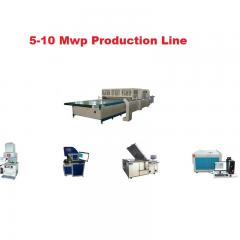
For projects with limited budgets, a supplier that can offer both complete production lines and selected individual machines may help the investor compare different configurations.
The purpose is to make a better investment decision—not simply to purchase the largest or most automated line available.
In today's solar manufacturing market, there is no equipment configuration that can guarantee profitability.
A new factory needs a clear customer base, realistic production capacity, competitive manufacturing costs, sufficient working capital, and a product strategy suited to its target market.
Used equipment may reduce the initial investment. New equipment may provide a configuration better suited to the intended products. A phased approach may reduce the risk of investing too much too early.
Each option has its place.
Before purchasing a solar panel production line, investors should first establish the expected sales volume, estimate the break-even point, assess the available budget, and define the modules they intend to manufacture.
Only then should they decide which production line makes commercial sense.
The goal is not to build the biggest solar module factory. It is to build a factory that can sell its products, control its costs, and sustain its business over the long term.
get latest company news
Scan To Wechat