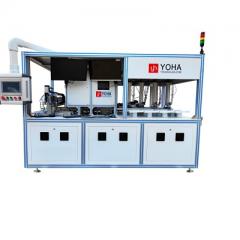
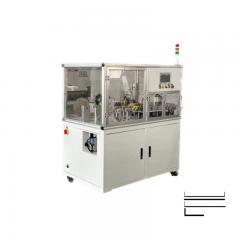
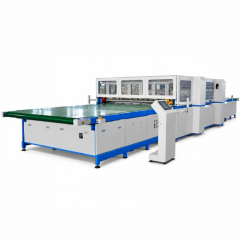
Solar Cell Laser Scribing Machine 30W
Solar Cell Laser Scribing Machine for 50MW–150MW production lines, compatible with all mainstream solar cell sizes, including 182mm and 210mm cells.

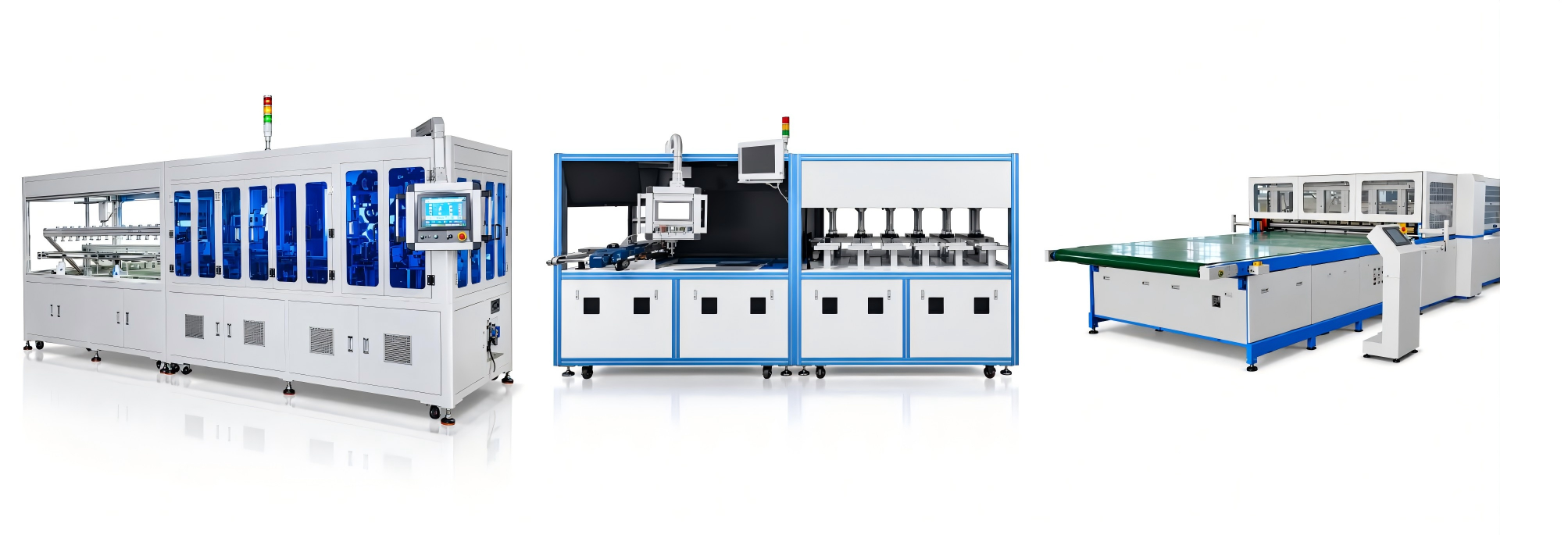

The HBS-SP1800 Automatic Solar Cell Tabber Stringer is designed for solar PV module manufacturing, enabling the automatic interconnection of solar cells into cell strings through precision ribbon soldering technology.
The machine is designed for 166mm solar cells and supports different busbar configurations, including 9BB, 10BB, 12BB, 16BB, and 20BB, subject to the machine's actual configuration and compatibility.
Integrating automatic cell feeding, ribbon cutting, soldering, and cell string transfer, the solar cell stringer machine performs the key interconnection processes required for PV module assembly. It connects individual solar cells in series using interconnection ribbons, forming complete cell strings for subsequent layup and lamination processes.
With automated operation and controlled soldering processes, the HBS-SP1800 helps improve production efficiency, reduce manual handling, and maintain consistent solar cell interconnection quality in photovoltaic module manufacturing.
Item NO.:
HBS-SP1800Solar Cells Automatic Tabber Stringer
Model: HBS-SP1800

Specification
|
Net capacity |
1250-1400 cells/hour |
|
Cell size |
30-166*166mm |
|
Cell thickness |
160um~300um |
|
Busbar |
5BB 6BB 9BB change over time 0.5H(feature) |
|
Ribbon width |
0.6mm-1.5mm |
|
Busbar thickness |
0.15-0.21mm |
|
Ribbon position |
Less than 0.1mm shift |
|
Flux coating |
Sunk auto coating flux |
|
Soldering method |
Infrared heating |
|
Breakage rate |
≤0.1%(A Grade Solar Cell) |
|
String length |
2100mm(2-12pcs) |
|
Length tolerance |
±0.5mm |
|
Straightness tolerance |
±0.5mm |
|
Cell gap |
0.8-30mm(adjustable) |
|
Cell position |
Mechanic Position |
|
Cell string transmission |
Teflon transmitation belt, driven by servo motor |
|
Cell defect detection type |
crack/cold welding/cell reveral /surface stain by Eye Visual |
|
Layup method |
Automatic layup/manual layup |
|
HMI |
Integrated touch screen IPC with cantilever operation box and English/Chinese interface |
|
Uptime |
≥95% |
|
Electric system |
PLC plus servo system |
|
Power |
50-60Hz/AC380V / 3 phase 5 lines |
|
CDA pressure |
06-0.8MPa |
|
CDA consumption |
500 liters / min |
|
Dimension |
5000*1390*2050mm(L*W*H) |
|
Weight |
2100kg |
Key Component List
|
PN |
Name |
Brand |
|
1 |
PLC |
Keyence(Japan) |
|
2 |
Controller |
Panasonic |
|
3 |
LCD Screen |
Weinview |
|
4 |
Linear system |
Hiwin |
|
5 |
Servo Motor |
Panasonic |
|
6 |
Cylinder |
SMC+AirTAC |
|
7 |
Solenoid Valve |
SMC+AirTAC+Pneulead |
1. High Production Efficiency
The Automatic Solar Cell Stringer is designed to automate the solar cell interconnection process, including cell feeding, ribbon handling, soldering, and string transfer. Automated operation helps reduce manual handling, improve production efficiency, and support continuous PV module manufacturing.
2. Precise Cell Interconnection and Soldering
The machine performs precision ribbon positioning and soldering to connect individual solar cells into complete cell strings. Accurate alignment and consistent soldering help establish reliable electrical connections and maintain the quality of solar cell interconnection during PV module assembly.
3. Compatibility with Different Solar Cell Configurations
Designed for photovoltaic module manufacturing, the solar cell tabber stringer can be configured to accommodate different solar cell sizes, busbar layouts, and interconnection ribbon specifications, depending on the machine configuration. This allows manufacturers to adapt production processes to different PV module designs and cell technologies.
4. Adjustable Production Parameters
Depending on the machine configuration, relevant production parameters can be adjusted to meet different solar cell and module manufacturing requirements. These may include ribbon positioning, soldering parameters, cell spacing, and string layout, helping manufacturers adapt the equipment to different production specifications.
5. Consistent Soldering Quality and Process Control
Stable soldering conditions and controlled ribbon positioning are important for reliable solar cell string manufacturing. The machine supports consistent cell interconnection by controlling key process parameters throughout the tabbing and stringing process, helping reduce soldering-related defects and maintain the quality of finished cell strings.
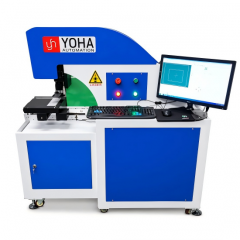
Solar Cell Laser Scribing Machine for 50MW–150MW production lines, compatible with all mainstream solar cell sizes, including 182mm and 210mm cells.
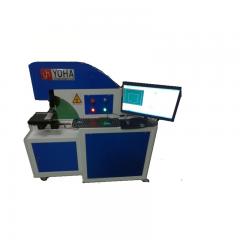
20W Solar Cell Fiber Laser Scribing Machine The 20W Solar Cell Fiber Laser Scribing Machine is designed for precision laser scribing and cutting applications in photovoltaic cell manufacturing. Using fiber laser technology, the machine performs controlled laser processing on solar cells to achieve accurate scribing and cell separation according to different production requirements. With a non-contact laser processing method, the equipment helps reduce mechanical stress on solar cells during processing while providing consistent scribing quality. The 20W fiber laser system is suitable for specialized solar cell processing applications where precision, process stability, and reliable production performance are essential. Designed for photovoltaic manufacturing processes, this solar cell laser scribing machine provides an efficient solution for PV manufacturers requiring precision solar cell scribing, laser cutting, and cell segmentation operations.
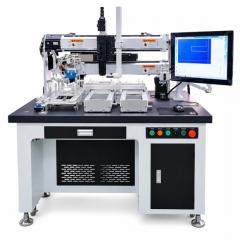
1st. 30W fiber laser with 1064nm wavelength and 45μm scribing width for high-precision solar cell processing. 2nd. Double-station design with a production capacity of 1,600 pcs/hour (1/2 cell). 3rd. Mechanical positioning and splitting, with a low cell breakage rate of less than 0.15%.
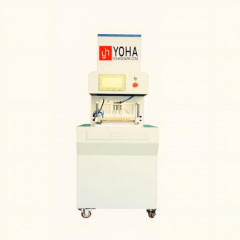
Solar Cell Tester (YHCT-AAA) The Solar Cell Tester is designed for I-V performance testing of monocrystalline and polycrystalline silicon solar cells. 1st – Light Simulation: Class A light spectrum and uniform irradiance. 2nd – Electrical Testing: High-speed measurement of Isc, Voc, Pmax, FF and other key parameters. 3rd – Data Recording: Automatic test data storage and graphical result display.
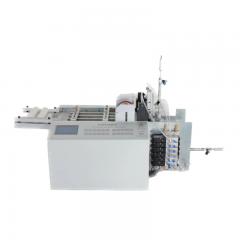
The LC-100SX PV Ribbon Cutting and Bending Machine is designed for automatic cutting and bending of solar tabbing ribbons and busbar ribbons. Compatible with 5BB–20BB solar cells, it features adjustable ribbon winding speed, a production capacity of up to 120 pcs/min, and quick changeover for different cutting lengths and ribbon materials. Equipped with an automatic output counter, this standalone machine offers convenient operation and maintenance-free performance for photovoltaic module manufacturing.
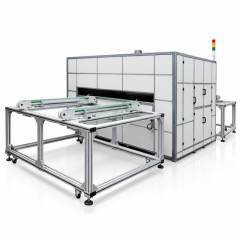
Automatic Inline Solar Panel EL Tester 1st. Defect Detection – Detects micro-cracks, broken cells, broken fingers and soldering defects. 2nd. Automatic Inspection – Automatically transfers solar modules and captures high-resolution EL images. 3rd. Inline Integration – Connects seamlessly with PV module production lines, improving inspection efficiency and product quality.

get latest company news
Scan To Wechat