
register for newsletter
get latest company news

The solar photovoltaic industry continues to attract investors worldwide. As global demand for renewable energy grows, more companies are considering entering the solar module manufacturing business.
However, starting a solar panel factory is not simply a matter of purchasing equipment, renting a building, and starting production.
The real purpose of investment is to make money, not just to build a factory.
Some investors enter the photovoltaic industry because of government subsidies, tax incentives, industrial policies, or stories of other manufacturers making significant profits. When the market is booming, it is easy to believe that investing in production capacity will automatically generate returns.
But business conditions change. Government incentives may be reduced, solar module prices may decline, competition may intensify, and production costs may become increasingly difficult to control.
Before investing, entrepreneurs need to return to the most fundamental question: Can this factory operate profitably without relying entirely on external support?
Here are six key considerations before starting a solar module manufacturing business in 2026.
Never start with equipment. Start with the market.
Before investing, research the actual demand for solar modules in your target country or region.
Consider the following questions:
Who are your potential customers: distributors, EPC contractors, project developers, or government projects?
What types of solar modules are in demand?
What are the prevailing market prices?
Who are your main competitors?
Do you have established sales channels or potential long-term customers?
Are there local certification requirements or import restrictions?
A factory without a clear sales strategy may end up with substantial production capacity but insufficient orders.
Remember, manufacturing products is only one part of the business. Selling those products at a profitable price is equally important.
Government incentives can create opportunities for solar manufacturing investments. However, subsidies should be considered additional support, not the foundation of a business model.
Some investors become overly optimistic after seeing successful cases in which manufacturers benefited from favorable policies or achieved high profits during periods of strong market demand.
The danger is assuming that yesterday's profits can be easily repeated today.
A responsible investor should evaluate the business under different scenarios:
What happens if government subsidies are reduced or discontinued?
Can the factory remain profitable if solar module prices decline?
What happens if raw material costs increase?
Can the business maintain sufficient orders during periods of weak demand?
How much working capital is required to support daily operations?
A factory should have the ability to survive normal market fluctuations.
Policy support can help a business get started, but genuine market competitiveness determines whether it can survive in the long run.
One of the most important decisions is determining how much production capacity your factory actually needs.
Some investors immediately consider building a 1GW or 2GW production line because larger capacity appears to offer greater business potential.
However, higher capacity also means greater investment, more equipment, higher operating expenses, and potentially more pressure on sales and cash flow.
A smaller production line with stable orders and efficient operations may be more commercially sustainable than a large factory operating below capacity.
When planning production capacity, consider:
Expected annual market demand.
Confirmed or realistically achievable sales volume.
Available investment capital.
Factory space and infrastructure.
Labor and operating costs.
Future expansion possibilities.
The right production capacity is not necessarily the largest one. It is the capacity that matches your market opportunities and financial resources.
Purchasing solar module manufacturing equipment is only one part of the total investment.
Investors should prepare a complete financial assessment that includes:
Initial Investment
Factory construction or rental.
Solar module production equipment.
Electrical systems and infrastructure.
Installation and commissioning.
Factory utilities and auxiliary facilities.
Operating Costs
Solar cells, glass, encapsulants, backsheets, frames, and other materials.
Labor and employee training.
Electricity and compressed air.
Equipment maintenance and spare parts.
Packaging and logistics.
Sales, administration, and financing expenses.
More importantly, calculate the actual manufacturing cost per watt and compare it with a realistic selling price.
A simplified financial model is:
Operating Profit = Sales Revenue − Manufacturing Costs − Operating Expenses
For a more complete investment evaluation, also consider depreciation, financing costs, taxes, working capital, and capital expenditure.
Do not make investment decisions based on optimistic sales forecasts or subsidy income alone.
Once the market, production capacity, and investment budget are clear, the next step is selecting suitable manufacturing equipment.
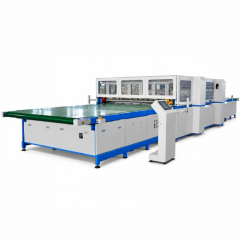
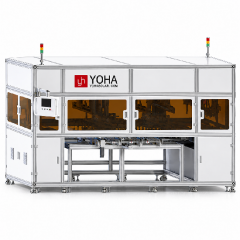
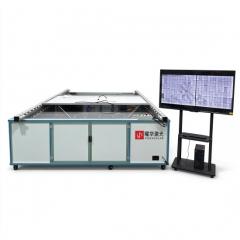
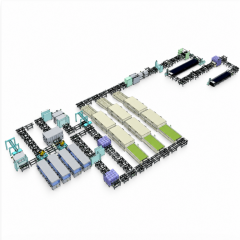
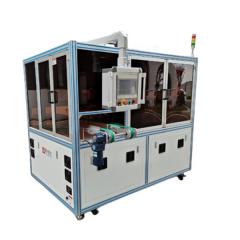
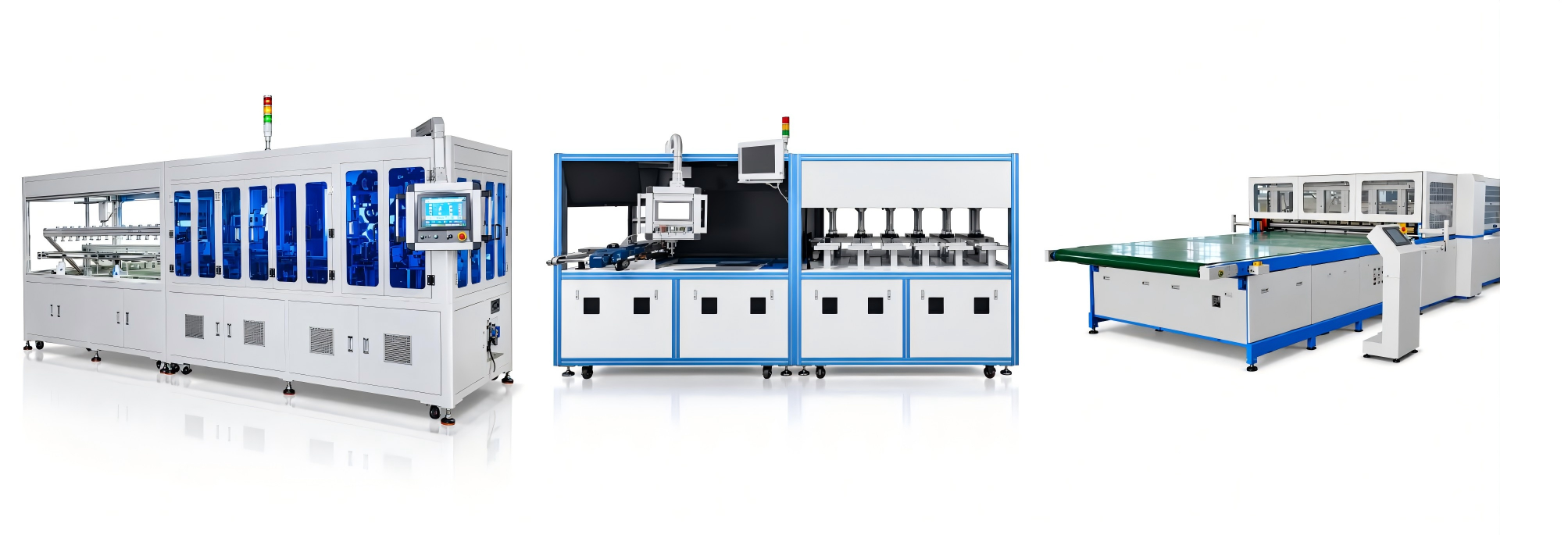
A typical solar module production line includes:
Solar Cell Testing and Sorting Machine.
Solar Cell Cutting Machine, if required.
Solar Cell Stringer.
Glass Loading and Cleaning Equipment.
Automatic Layup Machine.
Bussing and Welding Machine.
EL Inspection Machine.
Solar Module Laminator.
Trimming and Framing Equipment.
Junction Box Installation Machine.
IV Tester and Final Inspection Equipment.
Automatic Packaging System.
However, buying the most expensive or highly automated equipment does not necessarily guarantee the best investment return.
Equipment selection should be based on actual production requirements, product specifications, labor costs, equipment compatibility, maintenance requirements, and future expansion plans.
For some projects, a semi-automatic production line may provide a more reasonable initial investment. For larger manufacturing facilities, a highly automated solution may be more suitable.
The key is to find the right balance between investment costs, production efficiency, product quality, and long-term operating expenses.
The photovoltaic manufacturing industry is highly competitive. Technology continues to evolve, product specifications change, and manufacturers face increasing pressure to improve efficiency and reduce costs.
A factory designed only for today's production requirements may encounter difficulties when market demands change.
Investors should therefore consider:
Compatibility with different solar cell technologies and formats.
Flexibility to manufacture different module dimensions.
Equipment upgrade and expansion possibilities.
Production data monitoring and quality control.
Availability of spare parts and technical support.
Long-term equipment reliability.
A well-planned production line should not only meet current manufacturing requirements but also provide room for future development.
Starting a solar panel manufacturing business in 2026 requires more than enthusiasm about renewable energy or confidence in government incentives.
It requires market research, realistic financial planning, appropriate production capacity, suitable equipment selection, and a clear sales strategy.
Before investing, ask yourself one final question:
If there were no government subsidies, no special incentives, and no extraordinary market conditions, could your factory still compete and make money?
If you can answer this question with a well-supported business plan, you are in a much better position to make an informed investment decision.
At SUPO, we understand that every solar manufacturing project has different investment objectives, production requirements, and market conditions.
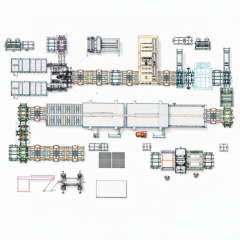
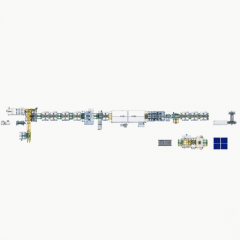
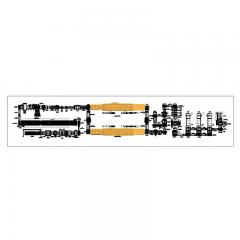
We provide solar module manufacturing equipment and customized production line solutions, supporting customers with equipment selection, production capacity planning, factory layout, installation, commissioning, and technical services.
Whether you are planning a new solar module factory or upgrading an existing production facility, our goal is to help you choose a production solution that matches your actual business needs.
Don't just build a solar panel factory. Build a solar manufacturing business designed to succeed.
Contact SUPO to discuss your solar module manufacturing project.
get latest company news
Scan To Wechat